Family Sunny: A Gentle Handwritten Font for Versatile Design Projects
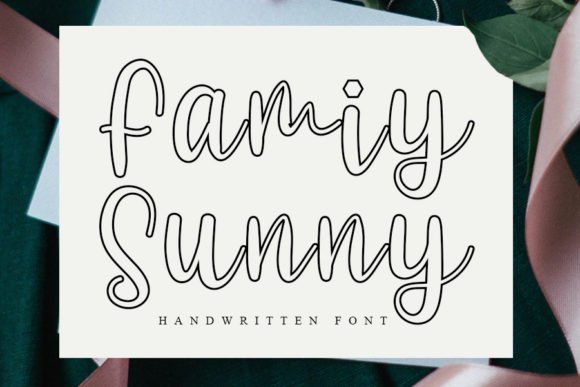
Family Sunny is a unique and approachable handwritten font that brings warmth and personality to any design. Its soft curves and natural feel make it an excellent choice for a wide range of creative projects, from branding to digital content. Whether you're designing a logo, crafting a website, or creating social media graphics, Family Sunny offers a friendly and inviting aesthetic that stands out in the world of typography.
What Makes Family Sunny Distinct?
At first glance, Family Sunny resembles many other handwritten fonts, but its subtle character sets it apart. The font features a gentle, organic style with slight variations in stroke weight and spacing, mimicking the natural flow of handwriting. This gives it a more personal and authentic look compared to overly stylized or rigid typefaces.
One of the key aspects of Family Sunny is its versatility. It works well in both print and digital formats, making it suitable for everything from business cards to web headers. Its readability is another strength—despite being a handwritten font, it remains clear and legible at various sizes, which is essential for effective communication.
Additionally, Family Sunny includes multiple weights and styles, allowing designers to adjust the tone of their projects without switching fonts. This flexibility makes it a practical option for those who need a single font family to handle different design needs.
Comparing Family Sunny with Similar Options
When considering alternatives to Family Sunny, it's important to understand how it stacks up against other popular handwritten fonts. Fonts like Brush Script and Great Vibes are often used for similar purposes, but they tend to have a more dramatic or ornate appearance. While these fonts can be visually striking, they may not be as versatile for everyday use.
Family Sunny, on the other hand, strikes a balance between elegance and simplicity. It doesn't overwhelm the reader with excessive embellishments, making it ideal for projects that require clarity and approachability. This makes it particularly well-suited for educational materials, marketing campaigns, or brand identities that aim to convey trust and friendliness.
In comparison to more modern sans-serif or serif fonts, Family Sunny adds a human touch that can enhance emotional engagement. However, it's worth noting that it may not be the best choice for projects requiring high contrast or minimalism, where a cleaner font might be more appropriate.
Strengths and Tradeoffs
The primary strength of Family Sunny lies in its ability to create a welcoming and personal atmosphere. It's especially effective in designs targeting younger audiences or those looking to build a sense of community. The font’s natural feel can help establish a connection with viewers, making it a powerful tool in branding and advertising.
However, there are some tradeoffs to consider. Because it is a handwritten font, it may not be the most suitable option for long blocks of text. In such cases, pairing Family Sunny with a more readable sans-serif or serif font can provide a balanced visual hierarchy. Additionally, while it is available in several weights, it may not offer the same level of customization as some premium font families.
Best-Fit Situations for Family Sunny
Family Sunny shines in scenarios where a warm and inviting aesthetic is desired. Here are a few examples of when this font might be the right choice:
- Branding and Logo Design: For businesses aiming to project a friendly and approachable image, Family Sunny can add a personal touch to logos, slogans, and brand elements.
- Social Media Graphics: The font’s playful yet professional look makes it perfect for creating eye-catching posts, banners, and promotional materials on platforms like Instagram or Facebook.
- Event Invitations and Cards: Whether it's a birthday card or a wedding invitation, Family Sunny can give your design a heartfelt and elegant feel.
- Educational Materials: Its readability and friendly appearance make it a great choice for textbooks, presentations, or learning resources intended for children or students.
On the flip side, if your project requires a more formal or minimalist look, you may want to explore other options. For example, a corporate website or a legal document would likely benefit more from a clean, structured font rather than a handwritten one.
Realistic Examples and Practical Comparisons
Imagine designing a website for a local bakery. Using Family Sunny for headlines and call-to-action buttons could create a cozy and inviting vibe that aligns with the brand’s identity. However, using it for body text might reduce readability, so pairing it with a complementary sans-serif font like Arial or Helvetica would be a wise choice.
Another scenario could involve creating a promotional poster for a charity event. Family Sunny could be used for the main title and taglines, drawing attention and evoking emotion. Meanwhile, a more traditional font would handle the details and supporting information, ensuring the message is clearly conveyed.
These examples highlight how Family Sunny can be effectively integrated into larger design systems while maintaining its distinct charm and usability.
When to Consider Alternatives
While Family Sunny is a strong option for many design applications, there are instances where another font might be more suitable. If your project involves large amounts of text, such as a lengthy article or a report, a more structured font would be better for readability and visual consistency.
Additionally, if you're working on a high-end or luxury brand, you might prefer a more refined or elegant font that matches the brand's tone. In these cases, exploring options like Garamond or Didot could be beneficial.
For designers who require extensive customization, such as adjusting individual letters or creating unique typographic effects, specialized tools or custom font creation services might be necessary. Family Sunny, while versatile, has limitations in terms of modification compared to more advanced font families.
Ultimately, the decision to use Family Sunny should be based on the specific needs of your project. By understanding its strengths and limitations, you can make a more informed choice that aligns with your design goals and audience expectations.