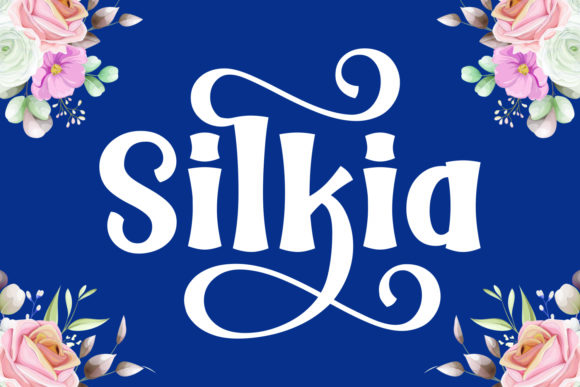
Silkia: A Bold Yet Elegant Handwritten Font for Versatile Design Needs
Silkia is a handwritten font that stands out for its balance of boldness and elegance. Designed to capture the natural flow of handwriting while maintaining a refined aesthetic, it offers designers a unique tool for creating visually appealing content across a wide range of applications. Whether you're crafting a logo, designing wedding invitations, or preparing signage, Silkia provides a distinct visual identity that can elevate your projects.
What Makes Silkia Distinct?
Silkia’s uniqueness lies in its ability to merge the casual feel of handwritten text with a level of sophistication that makes it suitable for professional use. Unlike more traditional serif or sans-serif fonts, Silkia features fluid curves and subtle variations in stroke width, which mimic the natural rhythm of human writing. This gives it a personal touch that digital fonts often lack.
The font’s design also includes a variety of weights and styles, allowing for greater flexibility in different design contexts. For example, a lighter version of Silkia might be ideal for headings or logos where subtlety is key, while a bolder variant could work well for headlines or posters that require attention-grabbing typography.
Comparing Silkia to Other Handwritten Fonts
When comparing Silkia to other handwritten fonts, it’s important to consider the specific needs of your project. Many handwritten fonts lean heavily into one direction—either very casual or very formal. Silkia, however, occupies a middle ground, making it versatile enough to adapt to various design scenarios.
Fonts like Brush Script or Lobster are known for their dramatic, flowing strokes, which can be perfect for creative designs but may not always fit a more professional context. In contrast, Silkia maintains a cleaner, more structured appearance that still feels handcrafted. This makes it a better choice for situations where readability and professionalism are important alongside a personal touch.
Another consideration is legibility. While some handwritten fonts can become difficult to read at smaller sizes or in certain colors, Silkia is designed with clear, consistent letterforms that maintain legibility even in less-than-ideal conditions. This is particularly useful for applications like signage, labels, or digital content where clarity is essential.
Best-Fit Situations for Using Silkia
Silkia’s versatility means it can be used in a variety of contexts. Here are some of the most common and effective uses:
- Logos and Branding: The font’s elegant yet approachable style makes it an excellent choice for logos that need to convey both professionalism and personality.
- Wedding Invitations: With its soft, flowing lines, Silkia adds a romantic and personal feel to wedding stationery, making it a popular choice among event designers.
- Headings and Titles: Its bold character works well for headlines in magazines, blogs, or websites, drawing attention without overwhelming the reader.
- T-Shirts and Apparel: The font’s distinctive look can make custom t-shirts stand out, especially when paired with minimalist designs or graphics.
- Signage and Labels: Due to its high legibility, Silkia is well-suited for signs, menus, and product labels where readability is crucial.
Tradeoffs and Limitations of Silkia
While Silkia offers many advantages, it’s important to recognize its limitations. Like all handwritten fonts, it may not be the best choice for long blocks of text. The irregular spacing and varying stroke widths can make large paragraphs harder to read compared to more structured fonts.
Additionally, Silkia may not be suitable for highly technical or formal documents where consistency and uniformity are paramount. In such cases, a more traditional font might be a better fit, even if it lacks the unique charm of a handwritten style.
Designers should also consider how Silkia interacts with other elements in their design. Because it has a distinct visual character, it may not pair well with every type of background, color, or image. Testing Silkia in different contexts is recommended to ensure it complements the overall design rather than clashing with it.
When to Choose Silkia Over Other Options
Silkia is an ideal choice when you want to add a personal, handcrafted feel to your design without sacrificing professionalism. It’s particularly well-suited for projects that benefit from a warm, approachable aesthetic, such as branding for lifestyle businesses, creative portfolios, or community-based initiatives.
If your project requires a font that can bridge the gap between casual and formal, Silkia is a strong contender. However, if you need a font that is purely decorative or extremely readable in large volumes, you may want to explore alternatives that better suit those specific needs.
Ultimately, the decision to use Silkia should be based on the goals of your project and the message you want to convey. By considering the strengths and limitations of the font, you can determine whether it aligns with your design vision and functional requirements.
Conclusion
Silkia is a thoughtful addition to any designer’s toolkit, offering a unique blend of boldness and elegance that sets it apart from other handwritten fonts. Its versatility allows it to be used in a wide range of applications, from logos and invitations to signage and apparel. However, like any font, it comes with tradeoffs that should be carefully considered based on the specific needs of your project.
By evaluating Silkia against other options and understanding its strengths and limitations, designers can make informed decisions that enhance their work while meeting practical requirements. Whether you’re looking for a font that adds personality to your brand or a versatile tool for creative projects, Silkia is worth exploring as part of your design process.