Santtina: A Modern Handwritten Font for Creative Projects
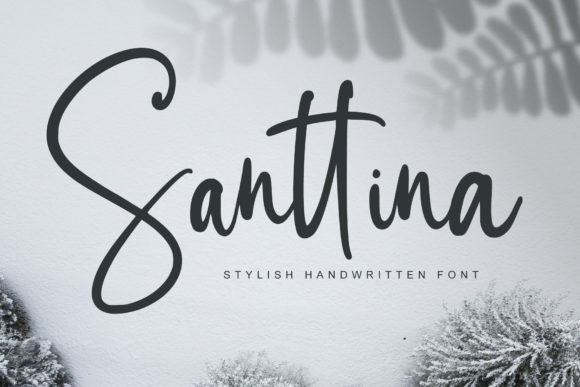
Santtina is a modern handwritten font that brings a personal and artistic touch to digital design. Designed to mimic the natural flow of handwriting, it offers a unique blend of elegance and spontaneity. This font is ideal for designers looking to add a human element to their work without compromising on style or readability.
What Is Santtina?
Santtina is a typeface that captures the essence of cursive writing while maintaining a clean and contemporary aesthetic. It features smooth curves, varied stroke widths, and subtle imperfections that give it a more organic feel compared to traditional sans-serif or serif fonts. The font is available in multiple weights and styles, allowing for flexibility in different design contexts.
Developed with attention to detail, Santtina is optimized for both print and digital use. Its character set includes support for a wide range of languages, making it a versatile choice for international projects.
Why Consider Santtina for Your Projects?
If you're working on creative projects that require a personal or artistic flair, Santtina can be an excellent choice. Its handwritten appearance makes it particularly well-suited for designs where a sense of authenticity is important. Some common use cases include:
- Watermarks on photography: Adding a subtle watermark using Santtina can help protect your images while maintaining a professional look.
- Album covers: The font's expressive nature complements music-related visuals, helping to convey emotion and creativity.
- Logos and branding: For businesses aiming to appear more approachable or artistic, Santtina can be used to craft memorable logos.
- Business cards: Incorporating Santtina into business card designs adds a personal touch that stands out from standard typography.
These applications highlight how Santtina can enhance visual storytelling and brand identity across various mediums.
Benefits of Using Santtina
The primary benefit of Santtina lies in its ability to evoke emotion and personality. Unlike more rigid typefaces, it feels more natural and relatable, which can help connect with audiences on a deeper level. Additionally, its versatility allows it to be used in both formal and informal contexts, depending on how it is styled or paired with other fonts.
Another advantage is its scalability. Whether you're designing for a small project or a large-scale campaign, Santtina adapts well to different sizes and formats. This makes it a reliable option for designers who need consistent results across multiple platforms.
Considerations and Tradeoffs
While Santtina has many strengths, there are also some factors to consider before using it in your projects. One potential limitation is its legibility at smaller sizes. Because of its handwritten characteristics, certain letters may become less distinct when scaled down, which could affect readability in specific contexts such as body text or subtitles.
Additionally, due to its stylized nature, Santtina may not be the best choice for projects that require strict typographic consistency or formal tone. In these situations, a more structured font might be preferable to ensure clarity and professionalism.
When Is Santtina a Strong Fit?
Santtina shines in scenarios where a designer wants to infuse warmth, creativity, and individuality into their work. It is especially effective in:
- Creative portfolios: Highlighting personal projects with a font that reflects your artistic personality.
- Event invitations: Creating a sense of occasion with a font that feels handcrafted and inviting.
- Typography-focused designs: Exploring the visual possibilities of text through dynamic and expressive letterforms.
- Personal branding: Building a unique identity that stands out in a crowded marketplace.
In these situations, Santtina’s distinctive style becomes an asset rather than a limitation.
When Might Alternatives Be Better?
There are instances where alternative fonts may be more suitable. If your project requires high readability in long-form text, such as articles or reports, a more conventional font like Helvetica or Arial would likely be more appropriate. Similarly, if you're working within a corporate environment that prefers a standardized look, opting for a font that aligns with established brand guidelines may be necessary.
For projects that demand precise alignment or uniformity, such as technical documentation or data visualization, the irregularities of Santtina could detract from the intended message. In such cases, choosing a font that prioritizes structure and clarity would be advisable.
Practical Insights for Choosing Santtina
Before deciding to use Santtina, consider the following questions:
- Does the project require a personal or artistic touch? If so, Santtina may be a good fit.
- Will the font be used in a context where readability is critical? If yes, evaluate whether the font's characteristics will compromise legibility.
- Is the design goal to stand out or blend in? Santtina tends to draw attention, so it's best suited for projects that aim to make an impression.
- Are there any brand guidelines or client preferences that should be followed? Always ensure the font aligns with these expectations.
By evaluating these factors, you can determine whether Santtina aligns with your design goals and audience needs.